
Profitability and cash reserves have halved since the global financial crisis.

The combined market capitalisation of the top 873 family-owned companies was down 26.3 per cent year-on-year (YoY) to Rs 61.8 trillion at the end of trading on Tuesday. It had grown 6 per cent in FY19 and nearly 20 per cent in FY18.
Some of the top indebted companies likely to face financial headwinds in the coming quarters include NTPC, PowerGrid, Tata Steel, Adani Power, JSW Steel, UPL, and Steel Authority of India. Together these 201 companies owed Rs 14.9 trillion to their lenders at the end of September 30, 2019, up 4.1 per cent year-on-year (YoY) during the first half of FY20.

In the manufacturing sector, output is expected to decline by about 70 per cent as only food-processing, and drugs and pharma industries are allowed to operate while other segments, such as engineering and metals, have shut operations.
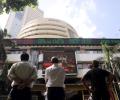
The bulk of the erosion in terms of value took place in India's most-valued firms. For instance, Mukesh Ambani-led Reliance Industries alone has lost Rs 3.8 trillion in m-cap, followed by HDFC Bank, which has seen its value erode by Rs 2.45 trillion and Tata Consultancy Services (TCS), which has lost Rs 1.85 trillion to stand at Rs 6.24 trillion, making it India's most-valued.

'The only thing that is safe right now are government securities.'

Market players said NBFCs and HNIs are recalibrating their plans based on the changing dynamics.

Both indices are down nearly 9 per cent from their all-time highs in mid-January. A sharp reversal seems difficult this time as the peak impact of the virus is yet to play out.

The answer to that depends on whether the globe is able to contain the virus spread, says Samie Modak.

Naved Masood, former secretary in the Ministry of Corporate Affairs and Sebi board member; TV Mohandas Pai, chairman of Manipal Global Education and Dinesh Kanabar, CEO, Dhruva Advisors have ceded their position on the NSE board following end of their tenure.

At issue size of Rs 10,355 cr, the offering will be Asia's biggest this year and fifth-largest domestically.

Vodafone Idea's net worth (or shareholders' equity) was down 73 per cent year-on-year to around Rs 17,600 crore at the end of the December 2019 quarter after the company reported a net loss of around Rs 6,400 crore during the quarter. Cumulatively, the company has lost nearly Rs 45,000 crore in the last four quarters, eroding its net worth to its lowest level in three-year. Analysts said a such a low level of net worth, coupled with continuing losses in operations, ruled out the possibility of the company getting fresh loans from lenders to fund its adjusted gross revenue (AGR) dues of Rs 54,000 crore.

Amendment to the Act, sovereign guarantees, investment portfolio, realty holdings, and governance issues to shape valuation.

In the past 10 trading sessions, shares of the state-owned company have shot up more than 50 per cent.

The Indian rupee is down nearly 2 per cent against the US dollar since the beginning of January 2019. Experts attribute the Indian rupee's relatively poor performance to a sharper-than-expected fall in economic growth in India.

The country's top FMCG stocks, such as Hindustan Unilever, ITC, Nestl, Britannia, Godrej Consumer Products, and Dabur, among others, are currently trading at around 41x their trailing 12-month earnings, down from their peak P/E multiple of around 48x at the end of December 2018.

On an overall basis, Nomura believes the economic conditions are suited for equity markets. The brokerage is predicting the market performance will be better in the first half of 2020 and "somewhat weaker" in the second half.

This is the biggest equity-raising exercise by an Indian corporate within a financial year. The fundraising - led by Citibank, Goldman, Kotak and Axis Capital as bankers - will see participation by foreign and domestic institutional investors.

Richest 10 account for 41% of promoter wealth, up from 33% in December 2018, says Krishna Kant.

The Sensex is on course to ending calendar year (CY) 2019 at a price-earnings (P/E) multiple of 29x, the highest in 25 years. Current valuations are, however, lower than those seen in the early 1990s. The Sensex has risen close to 14 per cent in the last 12 months, while the index underlying EPS dropped 6.7 per cent during the period.
